The full stack of power.From steel to silicon.
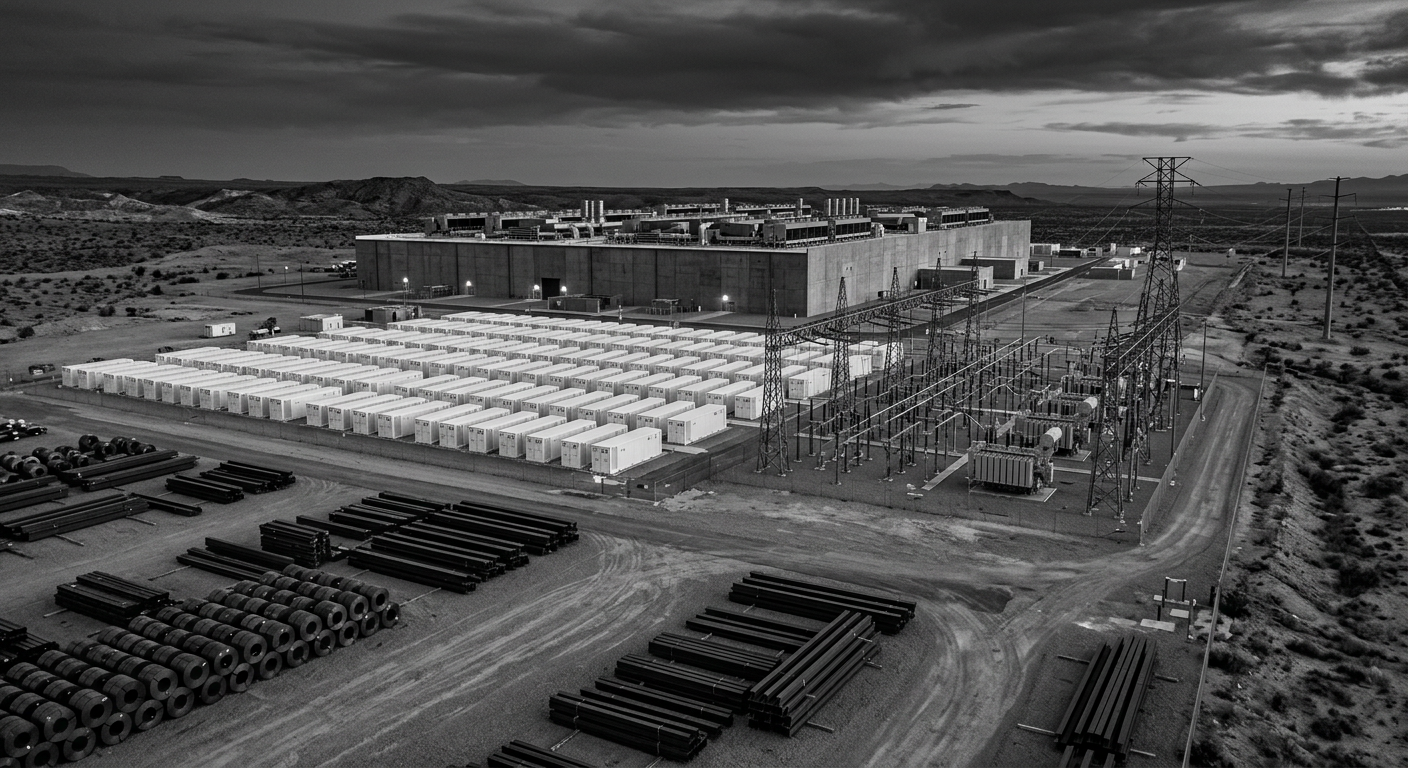
We make the steel and components that bring new capacity online, energize the site, and put the load to work. Energy markets pay for its flexibility. AI runs on its output.
- Materials
- Equipment
- Energization
- Energy Markets
- Compute
- Orbit
The Standard stack
Six layers. One company. No bottlenecks.
Each layer feeds the next. Because we own all of them, nothing waits on a supplier, and we keep the margin at every step.
- 01
Materials
Output: Steel
High-silicon electrical steel strip-cast near final gauge, made domestically instead of sourced on a multi-year waitlist.
Standard Materials - 02
Equipment
Output: Hardware
Transformers, switchgear, and substations built on that steel, run by the SPC Local Controller and EMS, and factory-tested before they ship.
Standard Equipment - 03
Energization
Output: Megawatts
Utility-scale batteries deployed, interconnected, and brought online in weeks.
Standard Power - 04
Energy Markets
Output: Revenue
Flexible load bid into ERCOT, PJM, CAISO, and every major ISO — paid to flex when the grid is tight.
Standard Power - 05
Compute
Output: Intelligence
The same load runs AI workloads, turning every megawatt into inference capacity.
Standard Compute - 06
Orbit
Output: Reach
Reusable rockets put customer payloads in orbit on a fixed schedule, at a published price per kilogram.
Standard Orbital
Why vertical
Compute is an energy problem. Energy is a materials problem.
- Speed to power
- AI is limited by electricity, and electricity is limited by hardware lead times. Owning the steel and the components means sites energize on our schedule, not a supplier backlog.
- Every megawatt earns twice
- Batteries and gensets sit behind the meter with the GPUs. When the grid is tight, the EMS dispatches them to cut grid draw and bid into wholesale markets, and the compute keeps running. One interconnection, two revenue streams, zero curtailed jobs.
- Margin at every layer
- Most companies capture one slice of the chain. We capture the value from ore to inference, so we can offer flat, predictable rates up and down the stack.
Operating companies
Five companies, one standard.
Electrical Steel
Standard Materials
High-silicon electrical steel, strip-cast on twin-roll lines close to final gauge. Thinner, lower-loss laminations, made domestically.
- Twin-roll strip casting
- High-silicon electrical steel
- Thin-gauge laminations
- Domestic supply
Electrical Equipment
Standard Equipment
Transformers, switchgear, and substations built on our own steel, with the SPC Local Controller and EMS wired in. Everything between the grid and the rack, factory-tested.
- Power transformers
- MV switchgear
- Unit substations
- Local Controller & EMS
Energization & Energy Markets
Standard Power
We deploy, own, and operate battery storage, then use AI agents to trade that energy across every major ISO — one flat rate for customers, revenue at every hour.
- Battery-as-a-Service
- AI energy trading
- Retail energy
- SPC Local Controller
Compute & AI Data Centers
Standard Compute
AI inference capacity sited on energized power at the metro edge. Megawatts become GPU capacity, delivered in weeks instead of years.
- AI data centers
- Metro-edge inference
- GPU capacity
- Behind-the-meter sites
Reusable Launch
Standard Orbital
Reusable rockets that deploy customer payloads to LEO, SSO, and beyond. Dedicated missions, or a rideshare plate on a fixed schedule at a published price.
- Reusable boosters
- Smallsat rideshare
- Dedicated missions
- Multi-orbit deployment